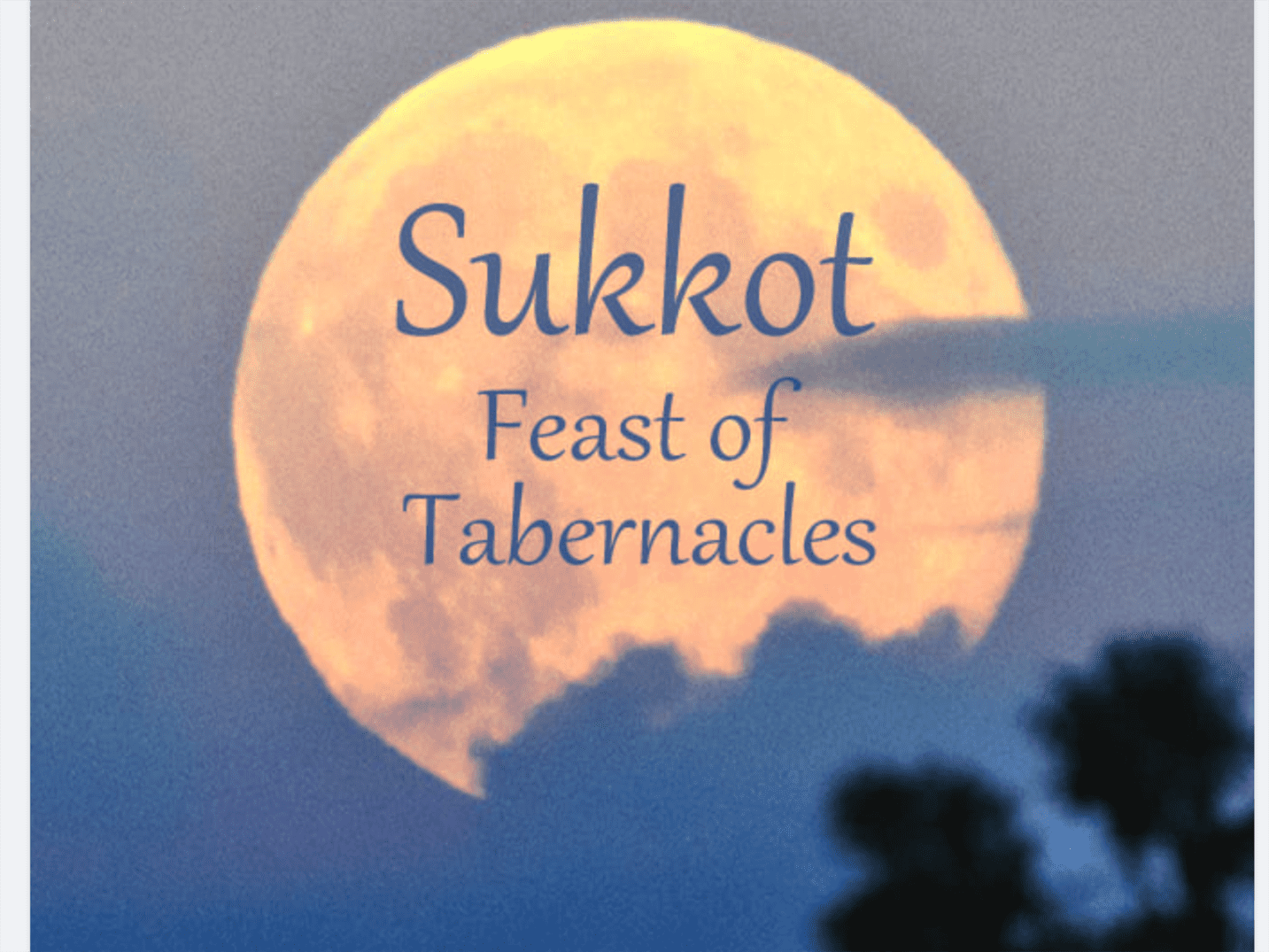
Well it is going to be always sunny. I reckon though with our glorified eyes they will adjust and perhaps we will not need a pair of shades? B-) Snow already falling in Italy. https://21stcenturywire.com/2020/09/05/global-cooling-noaa-confirms-full-blown-grand-solar-minimum/ https://pittsburgh.cbslocal.com/2020/09/30/flash-of-light-in-the-sky/ Everything else is going crazy, guess space weather is no different. Between the sun and space debris... By T.W. Tramm OCTOBER 2 marks the beginning of the seven-day Feast of Tabernacles, or “Sukkot” (Lev. 23:33-44). Commentators agree that Sukkot foreshadows the Millennial Kingdom when the Lord will literally dwell, or “tabernacle,” among men. However, similar to other biblical festivals, various themes and rituals of Sukkot are suggestive of the harvest of believers we call the Rapture. For instance— • Sukkot is called the Feast of Ingathering (Ex. 34:22). The Rapture is a gathering of believers to the Lord (2 Thess. 2:1) • Sukkot is the last festival of the harvest season. Thus, the shofar blast announcing Sukkot is the “last trump” (1 Cor. 15:52). • Sukkot is the name of the place the Israelites first camped after departing Egypt (Ex. 12:37). The departure from Egypt is a type of the Rapture. • Sukkot is one of two harvest festivals that coincide with the full moon (the other is Passover). Since the moon is symbolic of the Church, the full moon may picture the “fullness” of the Gentiles at the end of the age (Rom. 11:25). Furthermore, Scripture links the full moon to the return of the goodman of the house (Prov. 7:19, 20). The goodman is a typological picture of Jesus returning to settle accounts at the end of the age (Mark 13:35). • Solomon, a type of Christ, dedicated the Temple to the Lord on Sukkot. When the 120 priests sounded their trumpets, the glory of the Lord filled the house (2 Chron. 5). The Temple is a type of the Body of Christ, or Church (Eph. 2:20-22). • Grapes and apples are harvested in the autumn, around Sukkot. In Song 2 the passages depicting the Shulammite maid, a type of the Church, in the presence of her beloved shepherd, a type of Christ, mention apples and grapes (vv. 3-5, 13). • The Gentile Ruth, a type of the Church, married the Jewish redeemer Boaz, a type of Christ, after “all” the grain was harvested (Ruth 2:21, 23). Thus the typological wedding of Ruth and Boaz may have occurred around Sukkot (Ruth 2:21, 23; Deut. 16:13). • Sukkot is when the last grain is brought into the barns, grapes are crushed, and figs and olives are harvested (Deut 16:13). In Scripture, grain represents the Church, grapes represent nonbelievers, and figs and olives are symbolic of Israel (Matt. 3:12; 13:24-30; Rev. 14:18-20; 19:15; Matt. 24:32-34; Jer. 24:1, 2; Rom. 11:17-25; Jer. 11:16). • In Luke 17 judgment comes upon the world when people are “planting” (v. 28). Autumn, the season of Sukkot, is a popular time for planting as the weather is cool but the soil is still warm enough to stimulate root development. • In John chapter 7 Jesus attends Sukkot in partial secrecy, not openly manifesting Himself to everyone as His time had not yet fully come and not even his brothers believed in Him (vv. 5, 6). Similarly, the Rapture is a limited appearance of the Lord at a time when many don’t believe. • A popular view is that the wave offering of leavened loaves at Pentecost pictures the raptured Church presented before the Lord (Lev. 23:17). However, because leaven represents “sin” in Scripture, one can argue that the loaves cannot represent the transformed/raptured saints who will at this time not inhabit bodies defiled by sin (Rev. 7:14). The Pentecost wave offering may therefore represent the beginning of a spiritual harvest that culminates in a physical transformation around Sukkot. • In Revelation 7, immediately after the Rapture, a vast multitude is seen in heaven celebrating Sukkot with palm branches (Rev. 7:9-17; Lev. 23:40). The next festival alluded to is the Day of Atonement as an angel is seen performing the high priest ritual involving much incense (Rev. 8:3, 4; Lev. 16). Next, trumpets begin to sound, announcing a series of judgments upon the earth (Rev. 8, 9). It’s interesting that these allusions to the fall feasts occur in the reverse order of their respective positions on the calendar. Could the fulfillments follow this same pattern? Having highlighted how various Sukkot themes are evocative of the Rapture, understand we are NOT predicting that the catching away will occur at Sukkot. The point is that it could. The Rapture could also occur on another biblically significant date, or on a day not specially marked on our calendars (Matt. 24:42-44). Scripture says we see only in part and that God’s thoughts are not our thoughts (1 Cor. 13:12; Isa. 55: 8, 9). Is it possible, though we have a general blueprint for the finishing of God’s redemptive plan via the fall festivals, that the execution and timing may look different than we imagine? Of course it is. “With God all things are possible” (Matt. 19:26). In view of this fact, and Jesus’ numerous warnings that He is coming like a thief—on a day and at an hour no one can predict—it’s best to keep an open mind and to keep watch always. . . . NOTES: 1. Scripture designates three annual harvest festivals during which every Israelite male is to make the pilgrimage to Jerusalem to appear before the Lord: Passover/Unleavened Bread, Weeks, and Tabernacles (Ex. 23:17; Deut. 16: 11-12; 16, 17). 2. The moon as a symbol of the Church: In Song of Solomon the Gentile/Shulammite maid, symbolic of the Church, is compared to the moon: “Who is she that looketh forth as the morning, fair as the moon .... Return, return, O Shulamite; return, return, that we may look upon thee” (Song 6:10, 13). The spiritual parallel between the Church and the moon is that the full moon, as bright and beautiful as it is, has no brilliance of its own. It relies entirely upon the sun, which is a picture of Christ (Ps. 84:11; 19:4, 5), for its light. Without the sun, the moon has no light. Likewise, man has no light of his own. We were created in the image of God to reflect His brilliance and glory (Gen. 1:27). When we turn to face the majesty of God, when we surrender to Him and seek Him with all our hearts, we reflect His glory (Matt. 5:14). 3. Jesus comes like a thief: In his first letter to the Thessalonians Paul explains to the Church how they will be caught up into the clouds at Jesus’ return (1 Thess. 4:16, 17). Addressing the timing of this event, the Apostle says there is no need to discuss “times and dates” because it’s understood Jesus is coming “like a thief in the night”—on a day and at an hour no one can predict (1 Thess. 5: 1, 2). - Fair Use - <p style="text-align: center;"> Amy, the link did not work? :unsure:


Notifications
Clear all

September 30, 2020 9:05 am
September 30, 2020 11:15 am
September 30, 2020 12:30 pm
September 30, 2020 1:01 pm
September 30, 2020 2:18 pm